



Introduction
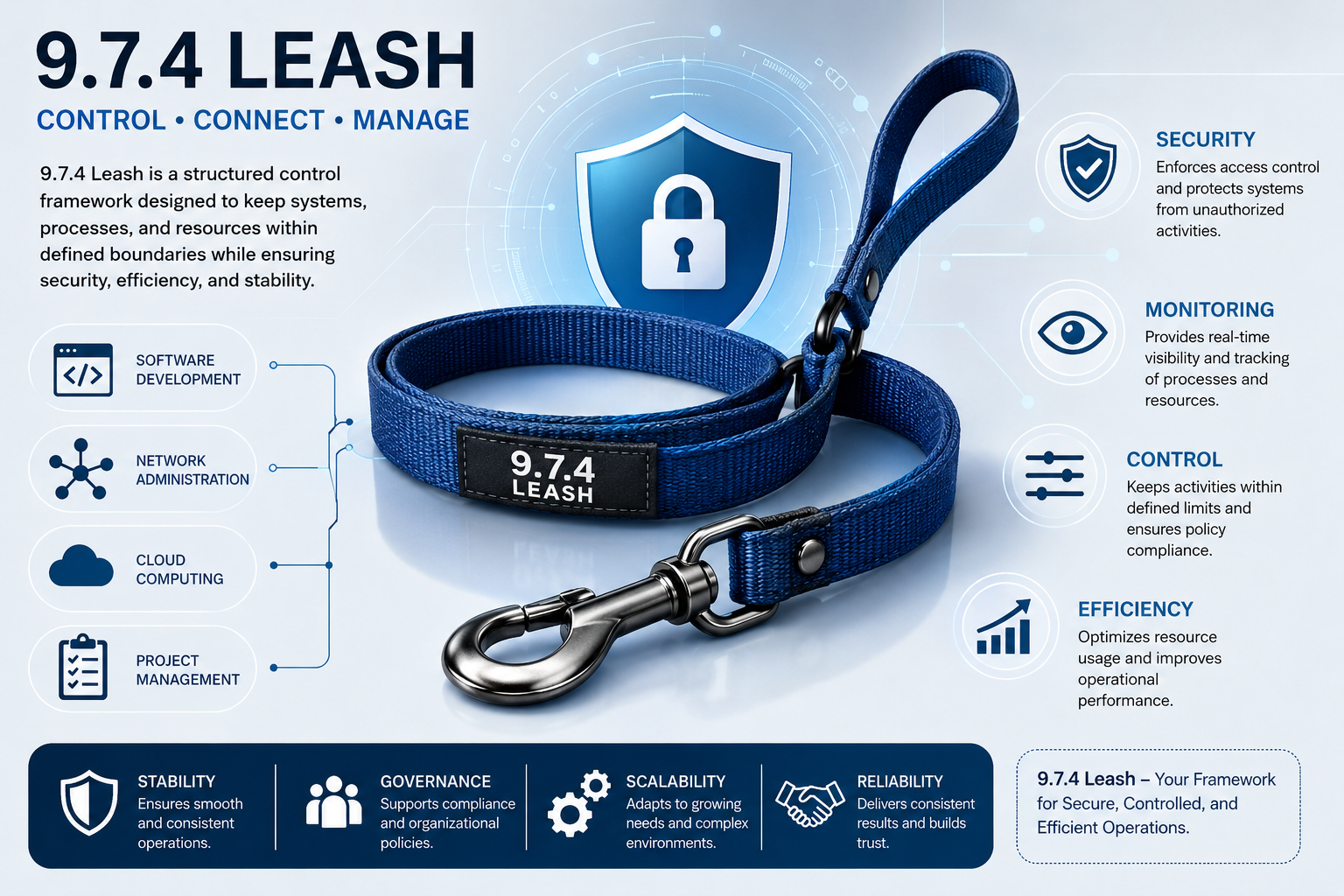
The term 9.7.4 Leash may sound technical or unfamiliar at first, but it represents a concept that can be applied in various digital, technological, and operational contexts. In many cases, numbered designations such as 9.7.4 are used to identify a specific version, model, protocol, or system feature. The word “leash” generally refers to a mechanism of control, guidance, connection, or limitation. When combined, 9.7.4 Leash can be understood as a framework, tool, or system designed to maintain control, improve management, and ensure stability within a particular environment.
As technology continues to evolve, organizations and individuals increasingly rely on systems that help maintain order while allowing flexibility. Concepts like 9.7.4 Leash highlight the importance of balancing freedom with control. Whether used in software management, network systems, project coordination, or digital environments, the underlying idea revolves around keeping processes connected and manageable.
The Meaning Behind 9.7.4 Leash
The term “leash” traditionally refers to a strap or cord used to guide and control movement. In modern technological language, however, it often symbolizes a system that keeps resources, devices, or processes within defined boundaries.
The numerical designation 9.7.4 may indicate a version number, development stage, or specialized configuration. Version-based naming conventions are common in software development because they help users identify updates, improvements, and compatibility changes. Therefore, 9.7.4 Leash could represent a specific iteration of a management or control system.
At its core, the concept emphasizes structure, oversight, and reliability while preventing unnecessary risks or disruptions.
Why Control Systems Are Important
In today’s digital world, control systems play a crucial role in maintaining efficiency and security. Without proper oversight, systems can become difficult to manage, leading to errors, vulnerabilities, and performance issues.
A framework such as 9.7.4 Leash can provide:
- Better monitoring of processes
- Improved security management
- Enhanced resource allocation
- Greater operational stability
- Reduced risk of system failures
Organizations depend on these benefits to ensure smooth operations and maintain productivity in increasingly complex environments.
Potential Applications of 9.7.4 Leash
Although the exact context of 9.7.4 Leash may vary, its principles can be applied across multiple industries and technologies.
Software Development
In software development, control mechanisms help developers manage code versions, user permissions, and deployment processes. A system identified as 9.7.4 Leash could serve as a version-specific management tool that ensures software remains stable while updates are introduced.
By maintaining strict guidelines and monitoring changes, developers can reduce bugs and improve user experiences.
Network Administration
Network administrators often require tools that control access, monitor traffic, and enforce security policies. A leash-like system can help keep network activities within predefined parameters.
This approach reduces the likelihood of unauthorized access, data breaches, and operational disruptions.
Project Management
Project management involves coordinating people, resources, and timelines. A framework inspired by the concept of a leash can help managers maintain oversight without restricting creativity.
Such systems can track progress, identify risks, and ensure that projects remain aligned with organizational goals.
Cloud Computing
Cloud environments involve numerous interconnected resources and services. Effective management requires monitoring usage, controlling permissions, and ensuring compliance.
A structured control mechanism similar to 9.7.4 Leash can help organizations maintain visibility and governance across cloud infrastructures.
Key Features of an Effective Leash System
Any system based on the leash concept should include several important characteristics.
Flexibility
A good control framework provides guidance without becoming overly restrictive. Users should be able to perform necessary tasks while still operating within safe boundaries.
Security
Security is one of the most important aspects of any management system. Effective controls help prevent unauthorized actions and protect valuable information.
Transparency
Users and administrators benefit from clear visibility into system operations. Transparency makes it easier to identify issues and understand how resources are being used.
Scalability
As organizations grow, their systems must adapt. Scalable control mechanisms can handle increased workloads and more complex environments without sacrificing performance.
Reliability
Consistency is essential for maintaining trust and operational efficiency. Reliable systems provide predictable performance and reduce downtime.
Benefits of Implementing Structured Controls
Organizations that adopt structured control systems often experience significant advantages.
One major benefit is improved efficiency. Clear guidelines reduce confusion and help teams focus on productive activities.
Another advantage is risk reduction. Monitoring tools and defined boundaries make it easier to identify problems before they become serious issues.
Structured controls also support compliance efforts. Many industries have regulations that require organizations to maintain oversight of their operations and data. Effective management frameworks help meet these requirements.
Additionally, organizations can improve collaboration because team members understand their roles and responsibilities within a controlled environment.
Challenges and Considerations
Despite their benefits, control systems must be implemented carefully. Excessive restrictions can limit innovation and reduce user satisfaction.
Organizations should strive to find the right balance between oversight and flexibility. This involves understanding operational needs, gathering user feedback, and continuously evaluating system performance.
Another challenge is maintaining compatibility with evolving technologies. As systems change, control frameworks must adapt to remain effective.
Regular updates, testing, and training are essential for long-term success.
The Future of Control Frameworks
The future of systems like 9.7.4 Leash is likely to be influenced by advances in artificial intelligence, automation, and data analytics. Modern control mechanisms are becoming smarter and more adaptive, allowing organizations to respond to changing conditions in real time.
Machine learning algorithms can identify patterns, detect anomalies, and recommend improvements automatically. These capabilities make control systems more efficient and proactive than ever before.
As technology continues to evolve, the need for intelligent management frameworks will only increase.
Conclusion
9.7.4 Leash represents the broader concept of structured control, oversight, and management within modern systems. Whether applied to software development, networking, cloud computing, or project management, its core purpose is to maintain stability while supporting productivity and growth.
By combining security, flexibility, transparency, and reliability, systems inspired by the leash concept can help organizations navigate increasingly complex environments. As technology advances, frameworks like 9.7.4 Leash will continue to play an important role in ensuring efficient, secure, and well-managed operations.