



Introduction
The digital world is evolving at an unprecedented pace. Businesses, developers, and organizations are constantly searching for efficient ways to connect applications, automate workflows, and deliver better user experiences. In this environment, concepts like Levapioli are gaining attention as symbols of modern API-driven development and digital transformation.
Although Levapioli is still emerging as a term, it is often associated with innovative approaches to application programming interfaces (APIs), software integration, and cloud-based connectivity. As companies increasingly rely on interconnected digital systems, solutions inspired by the Levapioli concept can play a significant role in improving productivity, scalability, and operational efficiency.
This article explores the meaning of Levapioli, its potential applications, benefits, challenges, and future impact on technology.
Understanding Levapioli
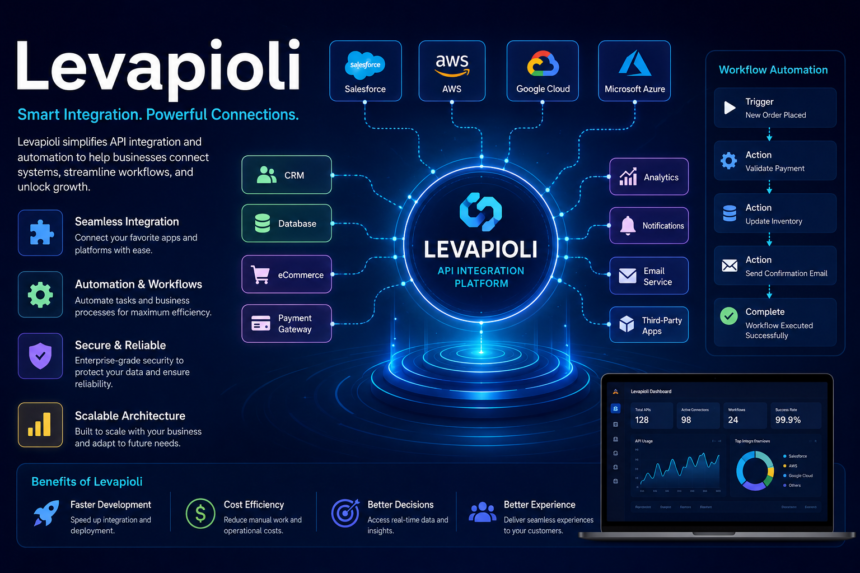
Levapioli can be viewed as a framework or concept focused on simplifying communication between different software applications. Modern businesses use multiple platforms for customer management, finance, marketing, inventory, analytics, and communication. These systems often need to exchange data efficiently and securely.
Levapioli represents the idea of creating seamless connections between these platforms through APIs and automation tools. Instead of manually transferring information from one system to another, organizations can rely on integrated digital workflows that operate in real time.
This approach reduces errors, saves time, and improves the overall effectiveness of business operations.
The Importance of APIs in Modern Technology
To understand Levapioli, it is important to understand the role of APIs.
An API, or Application Programming Interface, acts as a bridge between different software systems. APIs allow applications to share data and functionality without requiring direct access to each other’s internal code.
For example:
- A payment gateway can connect with an online store.
- A weather application can retrieve data from a forecasting service.
- A customer relationship management system can synchronize information with marketing software.
Levapioli emphasizes making these integrations simpler, faster, and more reliable.
Key Features of Levapioli
Simplified Integration
One of the primary goals of Levapioli is reducing the complexity of software integration. Developers can connect systems more efficiently without extensive custom coding.
Automation Capabilities
Automation is a core component of modern digital infrastructure. Levapioli-inspired systems can automatically transfer data, trigger actions, and execute workflows based on predefined conditions.
Scalability
As organizations grow, their software requirements become more complex. Levapioli promotes scalable architectures that can handle increasing amounts of data and user activity.
Security and Compliance
Data protection is a major concern in today’s digital landscape. Modern integration platforms must include encryption, authentication, and compliance features to safeguard sensitive information.
Real-Time Data Synchronization
Businesses often require immediate access to accurate information. Levapioli supports real-time communication between systems, ensuring data remains consistent across platforms.
Benefits of Levapioli
Increased Productivity
Manual data entry and repetitive administrative tasks consume valuable time. By automating these processes, organizations can focus on strategic initiatives and innovation.
Reduced Operational Costs
Automation minimizes labor-intensive tasks and decreases the likelihood of costly errors. This leads to lower operational expenses and improved efficiency.
Better Decision-Making
Real-time access to synchronized data allows managers and executives to make informed decisions based on current information rather than outdated reports.
Enhanced Customer Experience
Customers expect fast, personalized, and seamless interactions. Integrated systems help businesses provide better service by ensuring information flows smoothly between departments.
Faster Software Development
Developers can accelerate project timelines by using existing APIs and integration frameworks rather than building every component from scratch.
Levapioli in Business Operations
Organizations across various industries can benefit from Levapioli-based approaches.
E-Commerce
Online retailers often use multiple platforms for inventory management, order processing, shipping, and customer support. Integrated systems ensure these functions work together efficiently.
Healthcare
Medical facilities require secure data sharing between patient management systems, laboratories, pharmacies, and billing departments. Smart integrations improve both efficiency and patient care.
Finance
Banks and financial institutions rely heavily on data synchronization and secure transactions. Levapioli concepts support reliable communication between financial platforms.
Education
Schools and universities can integrate learning management systems, student databases, communication tools, and administrative software into a unified ecosystem.
The Role of Cloud Technology
Cloud computing has transformed the way software applications are deployed and managed. Levapioli aligns closely with cloud-based infrastructure because cloud platforms make integration more accessible and scalable.
Cloud environments offer several advantages:
- Lower infrastructure costs
- Flexible resource allocation
- Global accessibility
- Enhanced reliability
- Faster deployment cycles
By combining cloud services with API-driven architecture, organizations can create highly efficient digital ecosystems.
Challenges Associated with Levapioli
While the benefits are significant, there are also challenges to consider.
Integration Complexity
Older legacy systems may not support modern APIs, requiring additional development work to establish compatibility.
Security Risks
Connecting multiple platforms increases the importance of cybersecurity. Organizations must implement strong authentication and monitoring systems.
Data Consistency
Maintaining accurate information across multiple connected systems can be difficult if synchronization processes are not properly configured.
Skill Requirements
Developing and managing integrated environments requires technical expertise in APIs, cloud computing, and software architecture.
Future Trends
The future of Levapioli is closely connected to several technological trends.
Artificial Intelligence
AI-powered systems can analyze integration patterns, optimize workflows, and identify opportunities for automation.
Internet of Things (IoT)
As more connected devices enter the market, APIs will become increasingly important for managing communication between systems.
Low-Code Development
Low-code and no-code platforms are making integration accessible to non-technical users, expanding the reach of API-based solutions.
Advanced Analytics
Integrated systems generate large amounts of valuable data. Future Levapioli-inspired platforms may provide deeper insights through advanced analytics and predictive modeling.
Conclusion
Levapioli represents the growing importance of API integration, automation, and connected digital ecosystems in modern technology. By simplifying communication between software platforms, improving data flow, and enabling scalable infrastructure, it offers significant benefits for businesses and developers alike.
As organizations continue to embrace digital transformation, concepts like Levapioli will play an increasingly important role in creating efficient, secure, and future-ready technology environments. Whether used in e-commerce, healthcare, finance, education, or enterprise software, the principles behind Levapioli highlight the future of connected and intelligent digital systems.