



Introduction
Building a startup without external funding is both exciting and challenging. Bootstrapped startups rely on their own revenue, personal savings, or limited resources to grow instead of raising money from investors. In such businesses, financial modeling becomes an essential tool for making informed decisions, managing cash flow, and planning for sustainable growth. A well-designed financial model helps founders understand their financial position, forecast future performance, and identify potential risks before they become major problems.
What Is Startup Bootstrapped Financial Modeling?
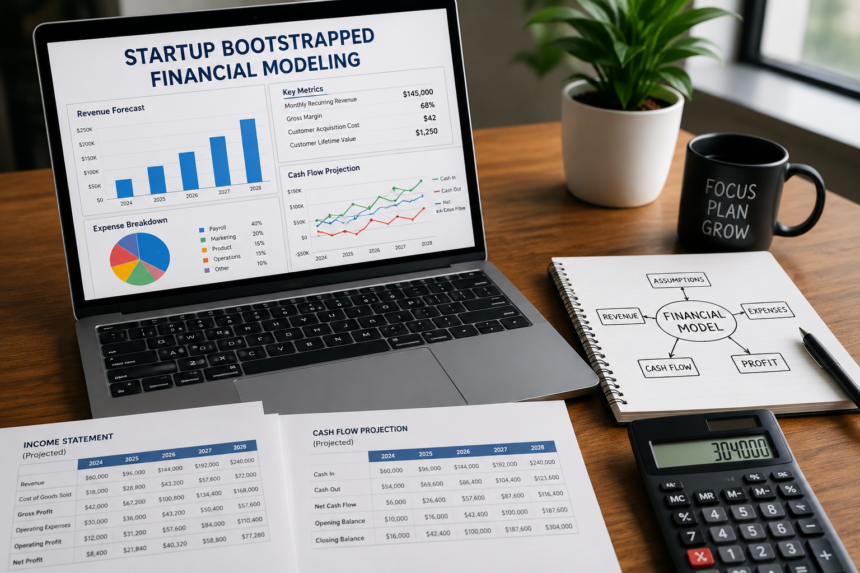
Startup bootstrapped financial modeling is the process of creating a financial representation of a self-funded business. The model combines historical financial data, assumptions, and future projections to estimate revenue, expenses, profits, and cash flow over a specific period. Unlike venture-backed startups that may prioritize rapid growth over profitability, bootstrapped businesses focus on efficient resource allocation and long-term financial stability.
Financial models are typically built using spreadsheet software such as Microsoft Excel or Google Sheets. These models provide founders with a clear picture of the company’s financial health and support strategic planning.
Why Financial Modeling Matters for Bootstrapped Startups
Bootstrapped startups operate with limited capital, making every financial decision critical. Financial modeling offers several benefits that help founders manage their businesses effectively.
First, it enables better cash flow management. Since bootstrapped startups cannot rely on investor funding to cover unexpected expenses, maintaining positive cash flow is crucial. A financial model predicts when cash shortages might occur, allowing business owners to prepare in advance.
Second, financial modeling supports informed decision-making. Whether hiring new employees, launching a product, or expanding into a new market, founders can evaluate the financial impact before committing resources.
Third, it improves budgeting and cost control. By forecasting expenses and comparing them with actual performance, startups can identify unnecessary spending and maintain financial discipline.
Finally, a financial model increases business credibility. Even if a startup is not actively seeking investors, lenders, business partners, and grant providers often require financial projections before offering support.
Key Components of a Financial Model
A comprehensive financial model contains several interconnected sections.
Revenue Forecast
Revenue projections estimate future sales based on realistic assumptions. Founders should consider pricing strategies, customer acquisition rates, conversion percentages, customer retention, and market demand. Conservative estimates are generally more reliable than overly optimistic projections.
Expense Forecast
Operating expenses include salaries, software subscriptions, marketing costs, rent, utilities, legal fees, insurance, and administrative expenses. Categorizing both fixed and variable costs helps founders understand how expenses change as the business grows.
Profit and Loss Statement
The income statement summarizes revenue, expenses, and net profit over a specific period. It provides insight into whether the business is becoming profitable and highlights areas where operational efficiency can improve.
Cash Flow Statement
Cash flow is often more important than profit for bootstrapped startups. A business may appear profitable while struggling to pay bills due to delayed customer payments. The cash flow statement tracks money entering and leaving the business, ensuring sufficient liquidity for daily operations.
Balance Sheet
The balance sheet provides a snapshot of assets, liabilities, and owner equity. It reflects the startup’s financial position and helps monitor debt levels and overall financial health.
Essential Financial Assumptions
Every financial model relies on assumptions. These assumptions should be realistic, research-based, and regularly updated as the business evolves. Common assumptions include monthly sales growth, pricing changes, customer acquisition costs, customer lifetime value, operating expenses, inflation, employee hiring plans, and tax obligations.
Because startups operate in uncertain environments, founders should review assumptions frequently and adjust forecasts based on actual performance.
Scenario Planning
One of the greatest strengths of financial modeling is the ability to test multiple business scenarios. Rather than relying on a single forecast, founders can prepare for different outcomes.
A best-case scenario assumes stronger sales growth and lower operating costs. A base-case scenario reflects expected business performance under normal conditions. A worst-case scenario considers slower revenue growth, increased expenses, or unexpected market challenges.
Scenario planning enables startup founders to prepare contingency plans and make proactive decisions when circumstances change.
Common Financial Metrics
Several key performance indicators help measure startup performance.
Monthly Recurring Revenue (MRR) is especially important for subscription-based businesses. Gross margin measures profitability after production costs. Burn rate indicates how quickly the startup spends available cash. Customer Acquisition Cost (CAC) measures the average cost of acquiring a new customer, while Customer Lifetime Value (CLV) estimates the total revenue generated by each customer throughout their relationship with the business.
Monitoring these metrics allows founders to identify trends and optimize business performance.
Common Mistakes to Avoid
Many startup founders make financial modeling mistakes that reduce forecast accuracy. One common error is creating unrealistic revenue projections without sufficient market validation. Overestimating sales often leads to poor financial planning.
Another mistake is underestimating operating expenses. Small recurring costs can accumulate quickly and significantly impact profitability.
Ignoring cash flow timing is another frequent problem. Revenue recorded on paper does not necessarily mean cash has been received. Delayed customer payments can create serious liquidity challenges.
Finally, many founders build a financial model once and never update it. A financial model should be reviewed monthly or quarterly to reflect actual business performance and changing market conditions.
Conclusion
Startup bootstrapped financial modeling is more than a budgeting exercise—it is a strategic management tool that guides business growth and improves financial decision-making. By developing realistic revenue forecasts, tracking expenses, managing cash flow, and preparing for different business scenarios, founders can reduce uncertainty and build resilient companies. A well-maintained financial model enables entrepreneurs to allocate resources wisely, identify growth opportunities, and navigate challenges with greater confidence. For bootstrapped startups where every dollar matters, financial modeling provides the clarity needed to achieve long-term sustainability and success.