



Introduction
The M6 motorway is one of the most important transport routes in the United Kingdom, connecting major cities, industrial regions, and economic centers. Among its busiest sections is the stretch between Walsall and Birmingham, which experiences heavy traffic from commuters, freight vehicles, and long-distance travelers every day.
When lane closures occur on the M6 near Walsall and Birmingham, they can significantly affect traffic flow, journey times, and local businesses. Understanding the reasons behind these closures and their impact can help motorists plan their journeys more effectively and reduce travel-related stress.
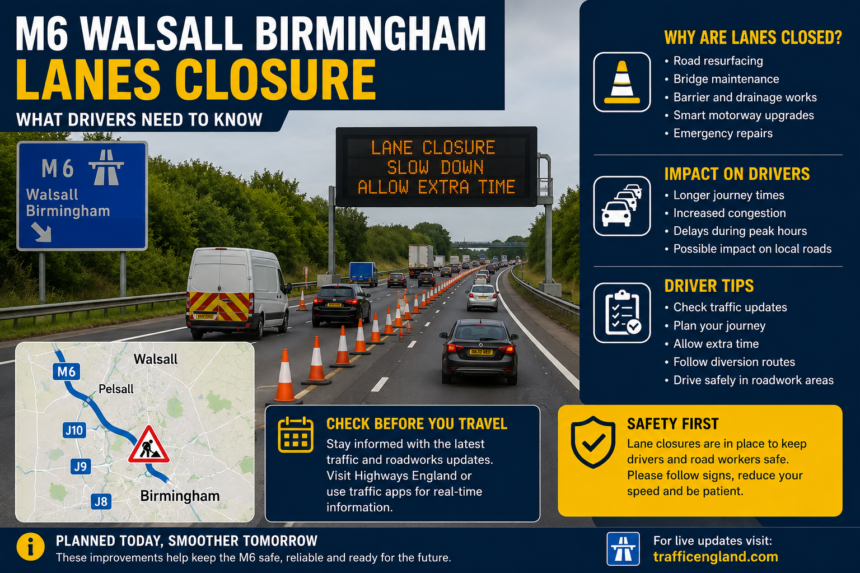
Why Lane Closures Occur on the M6
Lane closures on the M6 are typically implemented for several important reasons. The primary objective is to ensure road safety while maintaining and improving motorway infrastructure.
Common reasons include:
- Road resurfacing projects.
- Bridge maintenance and repairs.
- Barrier replacements.
- Drainage improvements.
- Smart motorway upgrades.
- Emergency repairs following accidents.
- Utility and infrastructure work.
These projects are necessary to keep the motorway safe, reliable, and capable of handling high traffic volumes.
Importance of the Walsall-Birmingham Section
The M6 corridor between Walsall and Birmingham is among the busiest road networks in the West Midlands region. Thousands of vehicles use this route daily for commuting and commercial transport.
This section provides access to:
- Birmingham city centre.
- Walsall and surrounding communities.
- Major business parks.
- Industrial estates.
- Logistics and distribution centers.
- Regional airports and transport hubs.
Because of its strategic importance, even minor lane restrictions can lead to noticeable traffic congestion.
Impact on Commuters
One of the most immediate effects of lane closures is increased travel time for commuters.
Drivers traveling during peak morning and evening hours often experience:
Longer Queues
Reduced lane capacity forces vehicles into fewer lanes, creating bottlenecks and slower-moving traffic.
Increased Journey Times
A trip that normally takes 20 to 30 minutes may take considerably longer when traffic volumes remain high during closure periods.
Alternative Route Congestion
Many drivers attempt to avoid motorway delays by using local roads. This can increase congestion in nearby towns and residential areas.
For regular commuters, planning ahead becomes essential when lane closures are in place.
Effects on Freight and Business Operations
The M6 is a major freight route that supports the movement of goods throughout the United Kingdom.
Lane closures can affect:
- Delivery schedules.
- Supply chain efficiency.
- Fuel consumption.
- Transportation costs.
- Driver working hours.
Businesses that rely on timely deliveries often need to adjust logistics planning when significant roadworks are scheduled.
Safety Benefits of Planned Closures
Although closures can be inconvenient, they often deliver important safety benefits.
Road maintenance helps:
- Repair damaged surfaces.
- Improve drainage systems.
- Replace worn safety barriers.
- Upgrade road markings.
- Enhance visibility and lighting.
Without these improvements, roads could become more hazardous for motorists and increase the risk of accidents.
In many cases, temporary inconvenience leads to long-term improvements in road quality and safety.
Smart Motorway Improvements
Some lane closures in the Walsall-Birmingham area are related to smart motorway projects.
Smart motorways use technology to improve traffic management through:
- Electronic speed limits.
- Traffic monitoring systems.
- Variable message signs.
- Emergency refuge areas.
Supporters argue that these systems improve traffic flow and reduce congestion, while critics emphasize the importance of maintaining strong safety standards.
Regardless of the debate, installation and maintenance work often require temporary lane restrictions.
Environmental Considerations
Traffic congestion caused by lane closures can have environmental consequences.
Vehicles stuck in slow-moving traffic may produce:
- Increased fuel consumption.
- Higher carbon emissions.
- Additional air pollution.
To reduce these effects, transportation authorities often schedule major works during off-peak periods, overnight hours, or weekends whenever possible.
Efficient project management helps minimize disruption while ensuring necessary improvements are completed.
Tips for Drivers During Lane Closures
Motorists can reduce inconvenience by taking several practical steps.
Check Traffic Updates
Before starting a journey, drivers should review current traffic reports and planned roadworks information.
Allow Extra Travel Time
Leaving earlier can help avoid stress and reduce the risk of arriving late.
Follow Official Diversions
Diversion routes are designed to manage traffic safely and efficiently.
Use Navigation Apps
Modern navigation systems often provide real-time traffic information and alternative route suggestions.
Drive Carefully
Roadwork areas may contain reduced speed limits, temporary barriers, and construction workers. Following safety instructions is essential.
Long-Term Benefits of Infrastructure Investment
While lane closures can create short-term challenges, they often contribute to long-term economic and transportation benefits.
Improved motorway infrastructure can provide:
- Better road safety.
- Smoother traffic flow.
- Reduced vehicle wear and tear.
- Enhanced reliability for freight transport.
- Greater regional economic growth.
Investments in transportation networks help support businesses, commuters, and communities throughout the West Midlands region.
Conclusion
M6 lane closures between Walsall and Birmingham are an important part of maintaining and improving one of the United Kingdom’s busiest motorway corridors. Although temporary restrictions can lead to congestion and travel delays, they are often necessary for road safety, infrastructure upgrades, and future traffic management improvements.
For commuters, businesses, and long-distance travelers, staying informed about planned closures can help minimize disruption. As infrastructure projects continue, the long-term benefits of safer roads, improved traffic flow, and enhanced transport reliability are expected to outweigh the temporary inconvenience caused by lane restrictions.