



Introduction
Riverbank collapses can have significant environmental, social, and economic consequences for local communities. One such incident that has attracted attention is the riverbank collapse at Iford Playing Fields. The event raised concerns about public safety, environmental stability, and the future maintenance of recreational spaces in the area.
Iford Playing Fields are an important community asset, providing space for sports, outdoor activities, and leisure. When part of the riverbank collapsed, local residents, visitors, and authorities were forced to assess the risks and determine appropriate solutions. Understanding the causes and implications of such incidents can help communities better prepare for future environmental challenges.
What Happened at Iford Playing Fields?
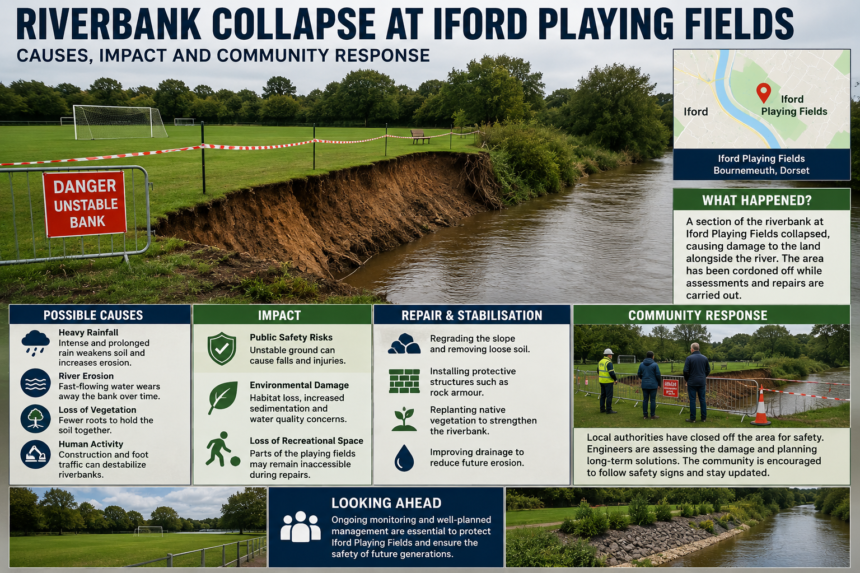
The riverbank collapse occurred along a section of land adjacent to the playing fields. The affected area experienced erosion that weakened the bank structure, eventually causing part of it to give way.
Riverbank failures can happen suddenly or develop gradually over time. In many cases, warning signs such as cracks, slumping soil, and increased erosion become visible before a major collapse occurs.
At Iford Playing Fields, the incident highlighted the vulnerability of riverside recreational areas to natural and environmental pressures.
Causes of Riverbank Collapse
Several factors can contribute to the collapse of a riverbank.
Natural Erosion
Flowing water constantly wears away soil and sediment along river edges. Over time, this process can weaken the bank and reduce its stability.
Heavy Rainfall
Periods of intense rainfall can saturate the ground with water. When soil becomes excessively wet, its ability to support weight decreases, increasing the likelihood of collapse.
Flooding Events
Floodwaters often move at higher speeds than normal river flow. This increased force can remove soil from the riverbank and accelerate erosion.
Vegetation Loss
Trees and plants help stabilize riverbanks through their root systems. When vegetation is removed or damaged, the soil becomes more vulnerable to erosion.
Human Activity
Construction work, foot traffic, and changes to nearby land use can also contribute to bank instability in certain circumstances.
Impact on Public Safety
One of the primary concerns following any riverbank collapse is public safety.
Potential risks include:
- Falling into unstable ground.
- Injuries from collapsing soil.
- Restricted access to recreational areas.
- Hazards for children and families using the playing fields.
Local authorities often respond by installing barriers, warning signs, and temporary closures to protect visitors until assessments are completed.
Public safety remains the highest priority during recovery efforts.
Environmental Consequences
Riverbank collapses can also affect local ecosystems.
The collapse may result in:
Habitat Disruption
Many plants, insects, birds, and aquatic species depend on stable riverbank environments.
Increased Sedimentation
Large amounts of soil entering the river can increase sediment levels and affect water quality.
Changes to Water Flow
Alterations to the riverbank may influence local water movement and contribute to further erosion downstream.
Vegetation Damage
Trees, shrubs, and grass located near the collapse zone may be lost or damaged.
Environmental specialists often conduct surveys to determine the extent of ecological impacts.
Effects on Community Recreation
Iford Playing Fields serve as an important recreational resource for local residents.
Activities commonly supported by such facilities include:
- Football matches.
- Outdoor fitness.
- Family gatherings.
- Community events.
- Walking and cycling.
A riverbank collapse can limit access to certain sections of the site and reduce the available space for recreational activities. Temporary restrictions may remain in place while repair and stabilization work is carried out.
For many residents, maintaining access to outdoor spaces is an important aspect of community well-being.
Investigation and Assessment
Following a riverbank collapse, engineers and environmental experts typically conduct detailed inspections.
These assessments focus on:
- Determining the cause of failure.
- Measuring the extent of erosion.
- Evaluating future risks.
- Identifying repair options.
- Monitoring nearby areas for additional instability.
The information gathered helps authorities develop effective restoration plans.
Repair and Stabilization Measures
Various techniques can be used to stabilize damaged riverbanks.
Regrading the Slope
Engineers may reshape the affected area to reduce stress on the bank.
Installing Protective Structures
Rock armor, retaining walls, or erosion-control systems can help prevent further damage.
Vegetation Restoration
Planting native trees and vegetation strengthens the soil and supports long-term stability.
Improved Drainage
Managing surface water can reduce soil saturation and minimize future risks.
These solutions are often selected based on environmental conditions and budget considerations.
Importance of Long-Term Monitoring
Even after repairs are completed, ongoing monitoring remains essential.
Regular inspections help authorities:
- Detect new signs of erosion.
- Assess vegetation growth.
- Evaluate repair effectiveness.
- Identify future maintenance needs.
Long-term monitoring reduces the likelihood of unexpected failures and supports sustainable river management.
Community Involvement
Local communities often play an important role in environmental stewardship.
Residents can contribute by:
- Reporting signs of erosion.
- Respecting safety barriers.
- Participating in conservation projects.
- Supporting local environmental initiatives.
Public awareness helps ensure that recreational spaces remain safe and enjoyable for future generations.
Conclusion
The riverbank collapse at Iford Playing Fields serves as a reminder of the challenges associated with managing riverside environments. Natural erosion, heavy rainfall, flooding, and other factors can weaken riverbanks and create safety concerns for local communities.
While the incident may have temporarily affected public access and recreational activities, it also highlights the importance of environmental monitoring, infrastructure maintenance, and community engagement. Through careful assessment, repair work, and ongoing management, authorities can help restore stability and protect valuable public spaces.
As climate patterns continue to change and weather events become more unpredictable, proactive riverbank management will remain essential for safeguarding community assets such as Iford Playing Fields.