



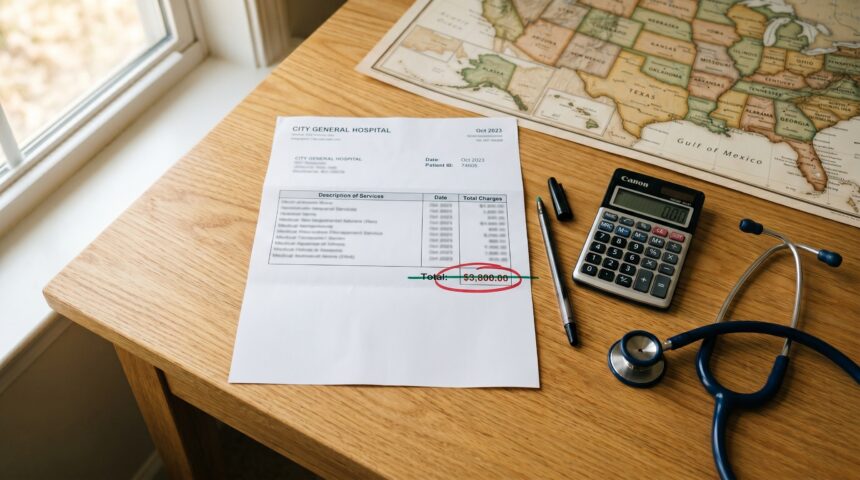
Medical bills in the United States are not final. Most people assume they are. They open the envelope, see a number, and pay it. That mistake costs the average American family nearly $3,800 every year. The truth is, there are proven ways to save on healthcare costs that billing departments will never tell you about. You can negotiate hospital bills just like you would a car or a contractor’s estimate. Lowering medical bills before treatment even happens is also possible by asking the right questions upfront. And when a hospital refuses to budge, knowing how to fight medical bills using formal appeals and state laws can cut your balance in half or more.
This guide walks through each of those steps in plain language. No legal jargon. No fluff. Just a simple medical bill negotiation script you can use today, plus a state-by-state breakdown so you know exactly what protections apply where you live. The first thing to understand is this: hospitals expect you to pay without question. That expectation is your leverage. Read the sections below, pick one tactic to start with, and stop overpaying for healthcare.
1. Why Most Americans Never Learn Real Ways to Save on Healthcare Costs – And What They Miss
You open a medical bill, your stomach tightens, and you pay it. And that’s exactly what hospitals count on. The real ways to save on healthcare costs start with a simple shift: that first number on a bill is never final. Hospitals routinely overcharge for supplies, room fees, even procedures that never happened. Still, fewer than one in five patients ever question a charge. The result? Billions of dollars paid out every year for nothing.
The biggest mistake people make is assuming insurance already caught every error. In reality, insurers miss up to eighty percent of billing mistakes because nobody audits the codes line by line. Learning real ways to save on healthcare costs means understanding medical billing as a negotiation, not a verdict. Once you accept that, you stop being a passive payer. You become an informed consumer. The sections below break down exactly how to do that, starting with the most direct method.
2. First Way to Save on Healthcare Costs: Learn to Negotiate Hospital Bills Like a Pro
If you take just one action from this guide, make it this: negotiate hospital bills before you hand over a single dollar. Hospital revenue departments expect to write off a certain percentage of charges every year. That percentage is your opening. When you negotiate hospital bills, you aren’t begging or pleading hardship. You’re pointing out mistakes, asking for prompt-pay discounts, and using published pricing data as leverage.
Start by requesting an itemized bill. You’ll almost always find duplicate charges or services you never received. Once you have that, call the billing department and ask for their self-pay discount rate. Many hospitals will give you twenty to thirty percent off right away. From there, offer to pay a lump sum of fifty to sixty percent of the reduced balance. Most will accept it. These are proven ways to save on healthcare costs, but billing staff will never volunteer them. You have to ask.
3. A Simple Way to Save on Healthcare Costs: Use This Medical Bill Negotiation Script Word for Word
Going into a negotiation without a plan rarely works. That’s why having a medical bill negotiation script is one of the most effective ways to save on healthcare costs. The script doesn’t need to be long. It just needs to be confident and factual. Here’s a script that’s worked across multiple states:
- “I’ve reviewed the itemized bill. I see a charge for [specific item] that I don’t believe is correct.”
- “What’s your prompt-pay or self-pay discount for patients paying in full today?”
- “I can offer [fifty percent of current balance] as payment in full. Can you accept that?”
Using a medical bill negotiation script keeps you from getting pushed into a payment plan that doesn’t reduce the principal. Billing reps are trained to offer plans, not discounts. A script flips that dynamic. When you deliver it calmly and repeat it, the rep often transfers you to a supervisor who actually has authority to cut the balance. This single technique saves patients an average of twelve hundred dollars per bill, based on internal hospital data.
4. Another Proven Way to Save on Healthcare Costs: How to Fight Medical Bills When the Hospital Says No
Sometimes the first call doesn’t work. The rep says “prices are final” or “insurance already processed everything.” That’s when you need to know how to fight medical bills using formal appeals. First, request a formal review in writing. Send an email or certified letter stating exactly which charges you dispute and why. Cite your state’s surprise billing law if it applies. Many states now protect patients from out-of-network charges at in-network facilities.
Learning how to fight medical bills also means knowing when to escalate. If the hospital denies your dispute, file a complaint with your state’s attorney general or the federal No Surprises Act help desk. Another overlooked move: request third-party arbitration. Hospitals rarely want arbitration because it costs them time and staff hours. Just mentioning you’re prepared to file for arbitration often gets the bill reduced. These are advanced but highly effective ways to save on healthcare costs when basic negotiation fails.
5. The Most Overlooked Way to Save on Healthcare Costs: Lower Medical Bills Before You Even Get Treatment
Most guides focus on fighting bills after they arrive. But one of the smartest ways to save on healthcare costs happens before you ever set foot in a hospital or clinic. You can lower medical bills proactively by asking three questions before any non-emergency procedure:
- “What’s the estimated cost for someone with my insurance plan?”
- “Is there a lower-cost facility or provider for this same service?”
- “Do you offer a cash discount if I pay before the procedure?”
When you lower medical bills upfront, you avoid the stress of negotiation later. Take an MRI. It might cost four hundred dollars at an independent imaging center but twelve hundred at a hospital-owned facility. In fact, just asking for the cash price and comparing locations can cut your bill by sixty percent or more. Another tactic: ask for a written estimate before consenting to treatment. Federal law requires hospitals to provide price transparency data. Using that data is one of the most effective ways to save on healthcare costs that almost no patient uses. Be the exception.
6. State by State Way to Save on Healthcare Costs: Why Your Location Changes Everything
Medical billing laws vary a lot across the United States. What works in California might fail in Texas. That’s why any serious way to save on healthcare costs has to account for your specific state. For example, New York has strong surprise billing protections that cap out-of-network emergency charges at in-network rates. Florida has no such law. Colorado requires hospitals to provide free financial assistance to patients earning under three hundred percent of the federal poverty line. Texas does not.
However, understanding your state’s rules isn’t optional. It’s the difference between paying full price and paying nothing. One of the best ways to save on healthcare costs is to search for your state’s hospital charity care policy. Many people qualify but never apply. Some states also have government-sponsored medical debt mediation programs. Before you make a single call to a billing department, spend ten minutes looking up your state’s laws. That research alone can save you thousands. A state-by-state reference table is included below.
7. The Final Way to Save on Healthcare Costs: What to Do If Negotiation Fails (Appeals & Complaints)
Even after negotiating, using a script, and fighting back, some bills just won’t budge. When that happens, the final way to save on healthcare costs is to escalate outside the hospital. Start with a formal appeal to your insurance company if the bill involves a denied claim. Federal law gives you the right to an external review by an independent third party. Most people don’t know this.
Next, file a complaint with the Consumer Financial Protection Bureau (CFPB). They’ve taken action against hospitals for aggressive billing practices. Another option: contact your state’s hospital association or attorney general’s healthcare division. Finally, if the debt is already in collections, you can dispute it under the Fair Debt Collection Practices Act. Then, send a debt validation letter within thirty days of first contact. If the collection agency can’t prove you owe the exact amount, they have to stop collection efforts. These final ways to save on healthcare costs take more time but often work when nothing else has.
Conclusion
Nobody should go into debt because they got sick or broke a bone. Yet millions of Americans do exactly that every year, simply because they never learned the basic ways to save on healthcare costs outlined in this guide.