



Introduction
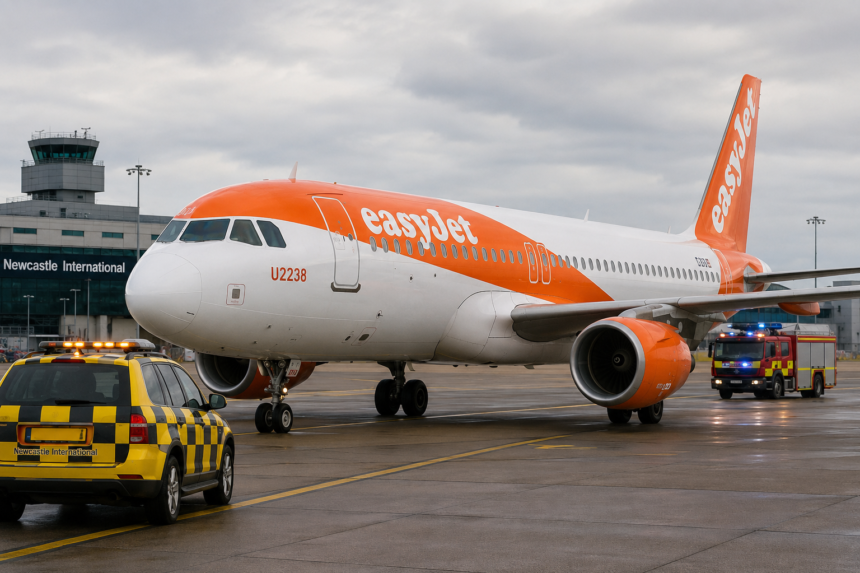
Air travel is widely regarded as one of the safest modes of transportation, yet emergency landings occasionally occur when unexpected situations arise during a flight. One such incident involved EasyJet Flight U2238, which was forced to divert and make an emergency landing at Newcastle Airport. The event attracted significant attention from passengers, aviation enthusiasts, and media outlets, highlighting the importance of airline safety procedures and emergency response systems.
Overview of the Incident
EasyJet Flight U2238 was operating a scheduled route when the crew declared an emergency and diverted the aircraft to Newcastle Airport. Reports indicated that the diversion was not caused by a technical failure of the aircraft but rather by a passenger welfare issue that required immediate attention. The flight crew followed established aviation safety procedures and decided that landing at the nearest suitable airport was the safest course of action.
The aircraft landed safely at Newcastle, where emergency and airport personnel were prepared to assist upon arrival. Such responses are standard whenever an aircraft declares an emergency, regardless of the severity of the situation.
Why Flights Make Emergency Landings
Many people associate emergency landings with serious mechanical failures, but that is not always the case. Airlines may divert flights for several reasons, including:
- Medical emergencies involving passengers or crew.
- Suspected technical issues requiring inspection.
- Severe weather conditions.
- Security concerns.
- Operational safety considerations.
In the case of Flight U2238, available reports pointed to a passenger medical or welfare emergency as the primary reason for the diversion. This demonstrates how airlines prioritize human safety above maintaining schedules.
The Crew’s Response
Commercial airline pilots undergo extensive training to handle emergencies of all kinds. When a situation develops onboard, the flight crew evaluates several factors, including the health and safety of passengers, the aircraft’s condition, weather conditions, and the availability of nearby airports.
For Flight U2238, the pilots communicated with air traffic control and declared an emergency. This allowed them to receive priority handling in the airspace and gain rapid access to Newcastle Airport. Such procedures help minimize delays and ensure that emergency services are ready when the aircraft arrives.
The professional handling of the situation reflects the effectiveness of modern aviation training and safety systems.
Impact on Passengers
Emergency diversions can be stressful for travelers. Passengers may experience uncertainty, concern, and disruption to their travel plans. However, airlines generally provide updates throughout the process and arrange onward travel once the immediate issue has been addressed.
In the case of Flight U2238, the diversion resulted in delays to the aircraft’s journey. After landing and addressing the emergency, arrangements were made for the flight to continue toward its intended destination.
Although delays can be frustrating, most passengers understand that safety must remain the highest priority.
Emergency Procedures in Modern Aviation
The aviation industry operates under strict international safety regulations. Airlines such as EasyJet maintain comprehensive emergency response plans that cover a wide range of scenarios.
When an emergency is declared:
- Air traffic control gives priority to the affected aircraft.
- Airport emergency teams are placed on standby.
- Medical personnel are alerted if needed.
- Ground operations prepare for the aircraft’s arrival.
- Passengers receive assistance following landing.
These procedures are designed to ensure that every emergency situation is managed efficiently and safely.
The Role of Newcastle Airport
Newcastle Airport played an important role in the successful handling of the incident. Airports across the United Kingdom maintain emergency readiness capabilities that enable them to respond quickly when aircraft require unscheduled landings.
When Flight U2238 diverted, airport personnel coordinated with air traffic controllers, emergency responders, and airline representatives to facilitate a safe arrival. Their readiness helped ensure that the situation was handled without further complications.
EasyJet’s Safety Record
EasyJet is one of Europe’s largest low-cost airlines and operates thousands of flights each week. Like other major carriers, the airline follows strict maintenance, operational, and safety standards.
Emergency diversions are relatively rare compared with the enormous number of flights conducted annually. When they do occur, they often demonstrate that safety systems are functioning exactly as intended. The decision to divert a flight is made to reduce risk and protect everyone onboard.
The Flight U2238 incident serves as an example of how aviation professionals prioritize passenger welfare and respond effectively to unexpected situations.
Lessons from the Incident
The emergency landing of EasyJet Flight U2238 highlights several important lessons about modern air travel:
- Passenger safety always comes first.
- Emergency diversions are precautionary measures designed to reduce risk.
- Pilots receive extensive training for unexpected situations.
- Airports and emergency services are prepared to respond quickly.
- Modern aviation safety systems are highly effective.
While emergency declarations may sound alarming, they often represent a proactive decision made to ensure the best possible outcome for everyone onboard.
Conclusion
The emergency landing of EasyJet Flight U2238 at Newcastle Airport demonstrated the aviation industry’s commitment to safety and passenger welfare. Faced with an onboard emergency involving a passenger welfare issue, the flight crew acted swiftly, declared an emergency, and diverted to the nearest suitable airport. Thanks to effective coordination between pilots, air traffic controllers, airport staff, and emergency responders, the aircraft landed safely and the situation was managed professionally.
Incidents like this remind travelers that although disruptions can occur, the systems and procedures in place within modern aviation are specifically designed to protect passengers and crew. Flight U2238 ultimately serves as a reassuring example of safety measures working exactly as intended.