



Introduction
The textile industry is one of the most important sectors in the global economy, providing employment to millions of people and supplying fabrics, garments, and textile products to markets around the world. Among the companies contributing to this dynamic industry, Chromtex has established a reputation for quality, innovation, and manufacturing excellence. Through advanced production methods and a commitment to customer satisfaction, Chromtex continues to play a significant role in the modern textile landscape.
As global demand for high-quality textiles increases, manufacturers must adapt to changing market trends, technological advancements, and sustainability requirements. Chromtex represents the type of textile enterprise that embraces these challenges while maintaining high standards of production and operational efficiency.
The Importance of the Textile Industry
Textiles are an essential part of everyday life. From clothing and home furnishings to industrial applications and medical products, textile materials are used in countless ways. The industry supports global trade and contributes significantly to economic growth in many countries.
Modern textile companies must focus on several critical factors:
- Product quality
- Manufacturing efficiency
- Sustainable production
- Innovation and research
- Customer satisfaction
- International competitiveness
Companies like Chromtex operate within this environment by continuously improving their processes and adapting to market demands.
Overview of Chromtex
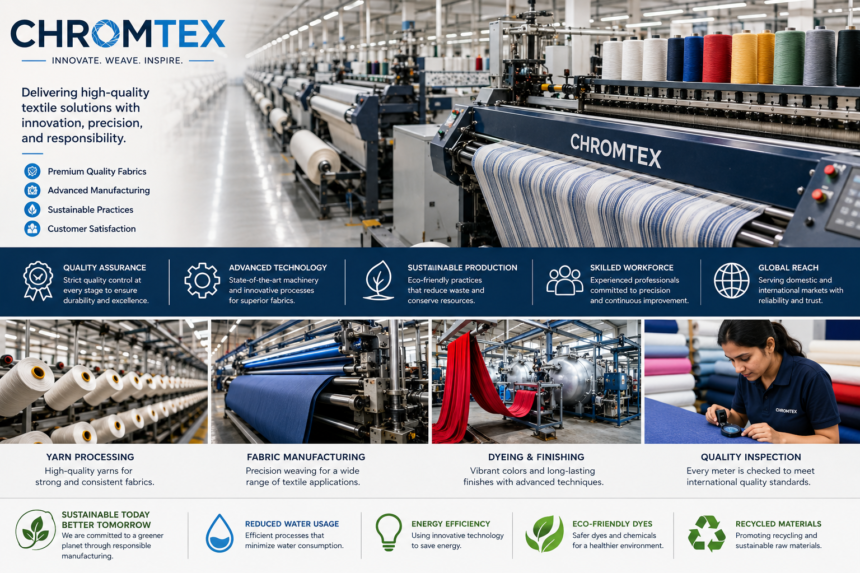
Chromtex is associated with textile manufacturing and fabric production, serving customers across various sectors. The company focuses on producing reliable textile products while maintaining consistent quality standards.
Its operations typically involve multiple stages of textile production, including:
- Yarn processing
- Fabric manufacturing
- Dyeing and finishing
- Quality control
- Distribution and supply chain management
By managing these processes effectively, Chromtex aims to deliver products that meet the expectations of both local and international markets.
Commitment to Quality
Quality remains one of the most important factors in textile manufacturing. Customers expect fabrics that are durable, comfortable, and visually appealing.
Chromtex places significant emphasis on quality assurance through:
Advanced Testing Procedures
Textile products undergo various tests to evaluate strength, color consistency, shrinkage resistance, and overall performance.
Standardized Manufacturing
Maintaining standardized production methods helps ensure that every batch of fabric meets established specifications.
Continuous Monitoring
Quality control teams monitor production processes from raw materials to finished products, reducing the risk of defects and inconsistencies.
This commitment to quality helps build trust with customers and strengthens the company’s reputation in competitive markets.
Innovation in Textile Manufacturing
Technology has transformed textile production over the past few decades. Modern machinery and automation systems allow manufacturers to improve efficiency while maintaining high levels of precision.
Chromtex embraces innovation through:
Modern Production Equipment
Advanced machinery enables faster production, reduced waste, and improved fabric consistency.
Digital Monitoring Systems
Smart manufacturing technologies help track production performance and identify opportunities for optimization.
Product Development
Research and development efforts contribute to the creation of new fabrics with enhanced properties such as improved durability, moisture management, and comfort.
Innovation allows textile companies to remain competitive in an industry that is constantly evolving.
Sustainability and Environmental Responsibility
Environmental sustainability has become a major focus for textile manufacturers worldwide. Consumers and businesses increasingly prefer products produced through responsible manufacturing practices.
Chromtex supports sustainability through several initiatives:
Efficient Resource Usage
Reducing water and energy consumption helps minimize environmental impact while lowering operational costs.
Waste Reduction
Improved manufacturing processes can reduce material waste and increase overall efficiency.
Eco-Friendly Production Methods
The adoption of environmentally conscious technologies contributes to cleaner and more sustainable textile production.
Responsible Supply Chains
Working with suppliers that follow ethical and environmental standards helps support sustainable business practices.
Sustainability not only benefits the environment but also enhances long-term business resilience.
Serving Diverse Markets
One of the strengths of modern textile companies is their ability to serve a wide range of industries.
Chromtex products may be used in:
Fashion and Apparel
Garment manufacturers rely on quality fabrics for clothing production.
Home Textiles
Products such as bedding, curtains, and upholstery fabrics require durability and aesthetic appeal.
Industrial Applications
Specialized textiles are used in manufacturing, construction, transportation, and other industrial sectors.
Technical Textiles
Advanced fabrics designed for specific performance requirements continue to grow in demand across multiple industries.
This market diversity helps create opportunities for growth and innovation.
Challenges in the Textile Industry
Despite its opportunities, the textile industry faces several challenges.
Rising Production Costs
Manufacturers must manage increasing costs related to raw materials, labor, and energy.
Global Competition
Textile companies compete with producers from around the world, requiring continuous improvement and innovation.
Changing Consumer Preferences
Customers increasingly seek sustainable, high-quality, and ethically produced products.
Supply Chain Disruptions
Global events can affect the availability of materials and transportation services.
Companies like Chromtex address these challenges through strategic planning, technological investment, and operational efficiency.
The Role of Technology in Future Growth
Technology will continue to shape the future of textile manufacturing. Several emerging trends are expected to influence the industry:
Artificial Intelligence
AI can improve production planning, quality control, and predictive maintenance.
Smart Fabrics
Innovative textiles with integrated technology are creating new opportunities in healthcare, sports, and wearable devices.
Automation
Automated systems can increase productivity while reducing operational costs.
Data Analytics
Manufacturers can use data-driven insights to optimize production and improve customer satisfaction.
Organizations that embrace these technologies will be better positioned for long-term success.
Future Outlook for Chromtex
The future of Chromtex appears promising as demand for quality textiles continues to grow. By focusing on innovation, sustainability, and operational excellence, the company can strengthen its position in domestic and international markets.
Continued investment in technology, workforce development, and environmentally responsible practices will likely contribute to future growth and competitiveness.
As the textile industry evolves, businesses that prioritize quality, efficiency, and customer value will remain leaders in the market.
Conclusion
Chromtex represents the modern textile industry’s commitment to quality manufacturing, technological advancement, and sustainable growth. Through its focus on innovation, efficient production, and customer satisfaction, the company contributes to the ongoing development of the global textile sector.
In an increasingly competitive and environmentally conscious world, Chromtex demonstrates how textile manufacturers can adapt, innovate, and succeed while meeting the demands of modern consumers and businesses alike.