



Introduction
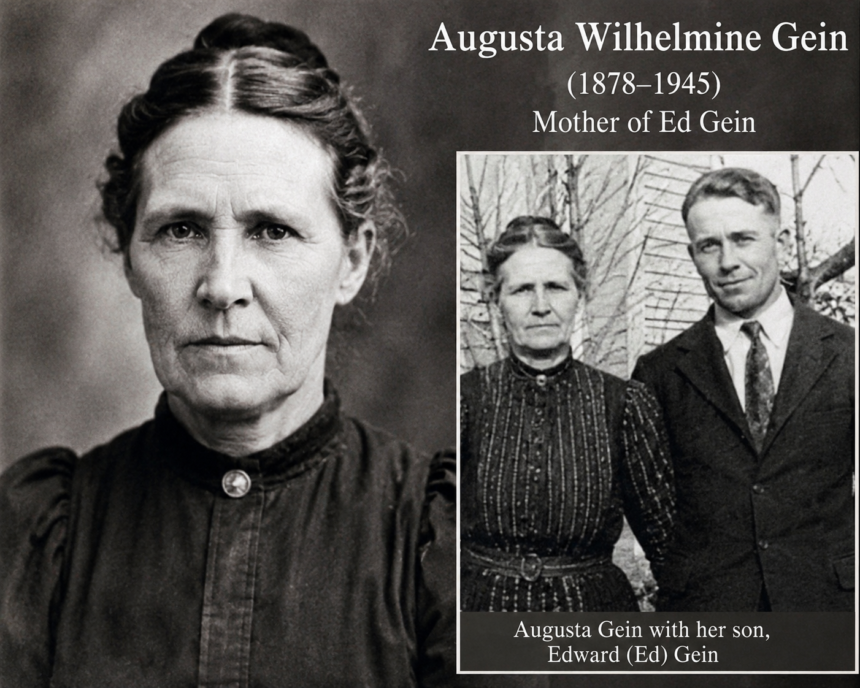
Augusta Wilhelmine Gein remains a figure of historical interest because of her connection to one of the most infamous criminal cases in American history. Although she never sought public attention during her lifetime, her name became widely known due to her role as the mother of Ed Gein, whose crimes shocked the United States during the 1950s.
Historians, psychologists, and crime researchers have often examined Augusta’s life in an effort to better understand the environment in which Ed Gein was raised. While it is important not to place responsibility for one person’s actions on another individual, many researchers believe that family dynamics and childhood experiences can influence personal development.
This article explores Augusta Wilhelmine Gein’s background, family life, beliefs, and her lasting place in discussions about American criminal history.
Early Life
Augusta Wilhelmine Gein was born in the United States during the late nineteenth century. Information about her early life is relatively limited, as she lived during a period when personal records and public documentation were not as extensive as they are today.
Like many women of her era, Augusta’s life was centered around family responsibilities, household management, and religious values. These beliefs would later play a significant role in shaping her family’s daily life.
Although few details are available regarding her childhood, historians generally describe her as a deeply religious and strong-willed individual.
Marriage and Family Life
Augusta married George Gein, and together they had two sons, Henry and Edward (Ed) Gein.
The family eventually settled on a farm in Wisconsin, where they lived a relatively isolated lifestyle. Rural life often required hard work and self-sufficiency, and the Gein family spent much of their time away from large communities.
Many accounts suggest that Augusta exercised considerable influence within the household. Family members often looked to her for guidance and decision-making.
Her strong personality became one of the defining characteristics frequently mentioned by researchers studying the Gein family.
Religious Beliefs and Values
One of the most discussed aspects of Augusta Gein’s life is her religious devotion.
She reportedly held very strict views regarding morality, behavior, and the outside world. According to historical accounts, she encouraged her sons to avoid influences she believed were harmful or immoral.
Religious faith played an important role in many American households during the early twentieth century. However, researchers have noted that Augusta’s views were often described as particularly strict and uncompromising.
Her emphasis on religious teachings shaped the environment in which her children grew up and influenced many aspects of family life.
Life on the Wisconsin Farm
The Gein family farm became a central part of Augusta’s life.
Located in a rural area of Wisconsin, the property provided a quiet and isolated environment. While isolation was common for many farming families during that period, some researchers believe that the limited social interaction experienced by the Gein family may have affected family dynamics.
Daily life revolved around farm work, household responsibilities, and religious activities.
Augusta reportedly preferred keeping her family close to home and encouraged limited involvement with broader social circles.
This lifestyle contributed to the family’s reputation for being somewhat separate from the surrounding community.
Relationship with Her Sons
Historical accounts often describe Augusta as having a particularly strong influence over her sons.
She emphasized obedience, discipline, and adherence to her moral beliefs. Like many parents, she wanted to guide her children according to her values and principles.
Researchers examining the Gein family have frequently discussed the emotional bonds within the household and the role Augusta played in shaping family relationships.
Because much of the available information comes from later investigations and historical analysis, interpretations vary among writers and scholars.
Nevertheless, Augusta’s influence remains one of the most frequently discussed elements of the Gein family story.
Public Interest in Augusta Gein
Interest in Augusta Wilhelmine Gein largely emerged after the criminal investigation involving her son attracted national attention.
As journalists and researchers sought to understand the background of the case, attention naturally expanded to include family history and childhood influences.
Books, documentaries, and historical studies often reference Augusta when discussing the social and family environment in which Ed Gein was raised.
Over time, she became a subject of analysis within broader discussions about psychology, family relationships, and criminal behavior.
Historical Legacy
Today, Augusta Gein is remembered primarily through her connection to one of America’s most widely studied criminal cases.
Her story illustrates how family members can become subjects of public curiosity when connected to major historical events. Although she never sought fame or public recognition, her name continues to appear in books, documentaries, and discussions related to crime history.
Researchers often emphasize the importance of examining historical context carefully and avoiding overly simplistic explanations for complex human behavior.
Understanding family influences can provide useful insights, but personal responsibility ultimately remains with the individual making choices and actions.
Conclusion
Augusta Wilhelmine Gein remains a significant figure in discussions surrounding one of the most notorious criminal cases in American history. As the mother of Ed Gein, she has attracted attention from historians, psychologists, and true-crime researchers interested in understanding the social and family environment of the Gein household.
While much of her life was spent quietly on a Wisconsin farm, her influence and family relationships continue to be examined decades later. Her story serves as a reminder of how historical events can bring unexpected attention to individuals who never intended to become public figures.
Today, Augusta Wilhelmine Gein remains an important part of the broader historical narrative surrounding one of America’s most discussed criminal cases.