


Introduction
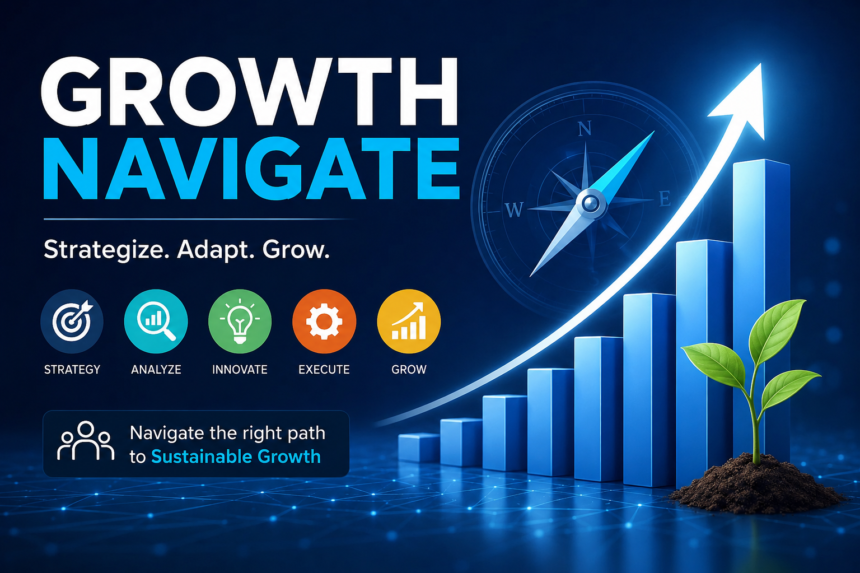
Growth is one of the primary goals of every business, whether it is a startup, a small company, or an established enterprise. However, achieving sustainable growth requires more than increasing sales or attracting new customers. It demands a clear strategy, informed decision-making, and the ability to adapt to changing market conditions. This is where the concept of Growth Navigate becomes valuable.
Growth Navigate refers to the process of guiding a business toward long-term success through strategic planning, performance analysis, customer-focused improvements, and continuous innovation. Rather than relying on guesswork, businesses use data, market insights, and measurable objectives to navigate their growth journey effectively.
This article explores what Growth Navigate means, why it matters, and the practical steps organizations can take to achieve sustainable growth.
What Is Growth Navigate?
Growth Navigate is a strategic approach that helps businesses identify opportunities, overcome challenges, and create a roadmap for continuous improvement. It focuses on aligning business goals with market trends, customer needs, and operational efficiency.
Instead of pursuing rapid expansion without direction, Growth Navigate emphasizes steady, measurable progress supported by data and strategic planning.
Why Growth Navigation Matters
Businesses operate in highly competitive environments where customer expectations and technology change rapidly. Without a clear growth strategy, organizations may struggle with declining sales, inefficient operations, or missed opportunities.
Growth navigation helps businesses:
- Define realistic growth goals
- Improve customer satisfaction
- Increase operational efficiency
- Strengthen competitive advantage
- Reduce business risks
- Make informed decisions based on reliable data
A structured growth strategy also enables companies to respond quickly to market changes while maintaining long-term stability.
Key Elements of a Growth Navigation Strategy
1. Clear Business Vision
Every successful growth journey starts with a clear vision. Businesses should identify where they want to be in the next three to five years and develop actionable objectives to reach those milestones.
A strong vision provides direction for employees, leadership, and stakeholders.
2. Market Research
Understanding the target market is essential for growth. Businesses should regularly analyze customer preferences, industry trends, and competitor strategies.
Market research helps companies identify new opportunities and avoid costly mistakes.
3. Customer-Centric Approach
Customers are the foundation of business growth. Organizations that actively listen to customer feedback and improve their products or services based on real needs often experience higher retention and stronger brand loyalty.
Personalized experiences, quality customer support, and consistent communication all contribute to long-term success.
4. Data-Driven Decision Making
Modern businesses generate large amounts of valuable data. Growth navigation relies on analyzing metrics such as:
- Website traffic
- Customer acquisition costs
- Conversion rates
- Revenue growth
- Customer lifetime value
- Retention rates
Using these insights helps businesses make smarter strategic decisions instead of relying on assumptions.
Building a Sustainable Growth Plan
A successful Growth Navigate strategy includes several important stages.
Set Measurable Goals
Businesses should establish SMART goals that are:
- Specific
- Measurable
- Achievable
- Relevant
- Time-bound
Clearly defined objectives make it easier to monitor progress and adjust strategies when necessary.
Strengthen Digital Presence
In today’s digital economy, online visibility plays a significant role in business growth. Companies should invest in:
- Search engine optimization (SEO)
- Content marketing
- Social media engagement
- Email marketing
- Mobile-friendly websites
A strong digital presence increases brand awareness and attracts qualified customers.
Invest in Innovation
Innovation allows businesses to remain competitive. This may involve developing new products, improving existing services, adopting emerging technologies, or streamlining internal processes.
Organizations that embrace innovation are better equipped to meet changing customer demands.
Develop High-Performing Teams
Employees are key drivers of business growth. Companies should provide ongoing training, encourage collaboration, and create a positive workplace culture.
Motivated teams contribute to higher productivity, improved customer service, and stronger overall performance.
Common Challenges During Business Growth
Although growth creates exciting opportunities, it also introduces new challenges.
Some common obstacles include:
- Limited financial resources
- Increasing competition
- Managing rapid expansion
- Hiring skilled employees
- Changing customer expectations
- Maintaining consistent quality
Businesses that anticipate these challenges can prepare effective solutions before they become major problems.
Measuring Growth Success
Growth should be measured using meaningful performance indicators rather than assumptions.
Important metrics include:
- Revenue growth percentage
- Customer retention rate
- Monthly recurring revenue
- Net profit margin
- Employee productivity
- Customer satisfaction scores
- Market share growth
Regular performance reviews help businesses identify areas requiring improvement while celebrating successful achievements.
Tips for Effective Growth Navigation
Businesses looking to improve their growth strategy should consider these best practices:
- Focus on long-term sustainability instead of short-term gains.
- Continuously monitor industry trends.
- Prioritize customer experience.
- Use analytics to guide decisions.
- Encourage innovation across teams.
- Invest in employee development.
- Adapt quickly to market changes.
- Build strong relationships with customers and partners.
Consistency often delivers better long-term results than aggressive but poorly planned expansion.
Future of Growth Navigation
As artificial intelligence, automation, and advanced analytics continue evolving, Growth Navigate strategies will become even more data-driven. Businesses will increasingly rely on predictive analytics to forecast trends, personalize customer experiences, and optimize operations.
Digital transformation will remain a major factor in helping organizations achieve sustainable growth while improving efficiency and customer satisfaction.
Companies that embrace technology while maintaining a customer-first mindset will likely outperform competitors in the years ahead.
Conclusion
Growth Navigate is more than a business strategy—it’s a structured approach to achieving long-term success through careful planning, continuous improvement, and informed decision-making. By understanding customer needs, leveraging data, investing in innovation, and building strong teams, businesses can confidently navigate today’s competitive marketplace.
Whether you’re launching a startup or scaling an established company, adopting a Growth Navigate mindset can help you identify opportunities, overcome challenges, and build a resilient business prepared for future success. Sustainable growth is achieved through consistency, adaptability, and a commitment to delivering lasting value for customers and stakeholders alike.