



Introduction
Wall art is one of the easiest and most effective ways to transform a room. Whether you prefer modern minimalism, classic paintings, abstract designs, or personalized prints, the right artwork can add personality, color, and warmth to any space. From living rooms and bedrooms to offices and commercial spaces, wall art helps create an inviting atmosphere while reflecting individual style.
Today, wall art is available in countless styles, sizes, and materials, making it easy for homeowners and interior designers to find pieces that complement any décor. This guide explores the importance of wall art, popular types, decorating tips, current trends, and how to select artwork that enhances your space.
What Is Wall Art?
Wall art refers to any decorative item displayed on a wall to enhance the appearance of a room. It can include paintings, framed photographs, canvas prints, metal artwork, wooden decorations, wall sculptures, posters, murals, and many other artistic creations.
Beyond decoration, wall art allows people to express their personality, interests, and creativity through visual design.
Why Wall Art Matters
A thoughtfully chosen piece of artwork can dramatically improve a room.
Benefits include:
- Adds personality to your home.
- Creates a welcoming atmosphere.
- Complements furniture and décor.
- Introduces color and texture.
- Serves as a conversation piece.
- Reflects personal taste and creativity.
Even a simple artwork can completely change the mood of a space.
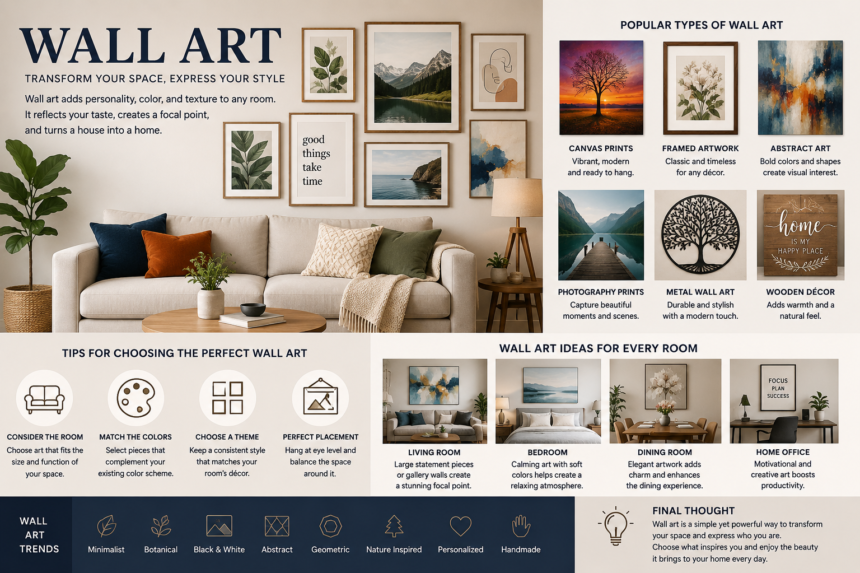
Popular Types of Wall Art
Canvas Prints
Canvas prints are among the most popular choices because they are lightweight, durable, and available in countless designs.
Framed Artwork
Traditional framed paintings, illustrations, and photographs provide a timeless appearance suitable for almost any room.
Abstract Art
Abstract pieces use shapes, colors, and patterns to create visually interesting focal points.
Photography Prints
Nature photography, city skylines, wildlife, and landscapes remain popular choices for modern interiors.
Metal Wall Art
Metal sculptures and decorative panels add texture and a contemporary look.
Wooden Wall Décor
Wooden signs, carved artwork, and rustic decorations create warmth and character.
Choosing the Right Wall Art
Several factors should be considered before purchasing artwork.
Room Size
Large walls often benefit from oversized artwork, while smaller rooms may look better with compact pieces or gallery arrangements.
Color Palette
Choose artwork that complements your existing furniture, flooring, and paint colors.
Theme
Maintain consistency with your room’s design style, whether modern, industrial, traditional, Scandinavian, or minimalist.
Placement
Artwork should generally be displayed at eye level for the best visual balance.
Wall Art for Different Rooms
Living Room
Large statement pieces or gallery walls create attractive focal points.
Bedroom
Calming artwork featuring nature, abstract designs, or soft colors promotes relaxation.
Dining Room
Elegant paintings and decorative prints enhance the dining experience.
Home Office
Inspirational quotes, landscapes, or modern artwork encourage creativity and productivity.
Hallways
Series of framed photographs or coordinated artwork add interest to otherwise empty spaces.
Current Wall Art Trends
Interior design trends continue to evolve.
Popular styles include:
- Minimalist artwork
- Botanical prints
- Black-and-white photography
- Abstract paintings
- Geometric designs
- Personalized family portraits
- Nature-inspired landscapes
- Sustainable handmade décor
These trends combine visual appeal with personal expression.
Tips for Displaying Wall Art
To achieve the best results:
- Measure your wall before purchasing artwork.
- Leave enough space between multiple frames.
- Use proper wall anchors for heavy pieces.
- Mix different sizes for gallery walls.
- Ensure artwork complements lighting.
- Avoid overcrowding the space.
Careful placement helps create a balanced and attractive interior.
Caring for Wall Art
Proper maintenance extends the life of your artwork.
- Dust regularly with a soft cloth.
- Avoid direct sunlight to prevent fading.
- Keep artwork away from excessive moisture.
- Clean glass frames gently using appropriate cleaners.
- Inspect hanging hardware periodically.
These simple steps help preserve both appearance and value.
Conclusion
Wall art is much more than decoration—it is a form of personal expression that brings life, character, and beauty into any environment. Whether you choose modern canvas prints, classic framed paintings, metal sculptures, or personalized artwork, selecting pieces that reflect your style can completely transform your home or office.
With thoughtful planning, proper placement, and regular care, wall art becomes a lasting investment that enhances both comfort and visual appeal. No matter your decorating style or budget, there is a perfect piece of wall art to make every room feel unique and inviting.