



Introduction
The matchup between the New York Giants and the Buffalo Bills is always an exciting contest for NFL fans. Both teams bring unique strengths to the field, combining explosive offenses with determined defensive units. Every meeting between these franchises features talented quarterbacks, dynamic playmakers, and game-changing defensive performances that can influence the outcome until the final whistle.
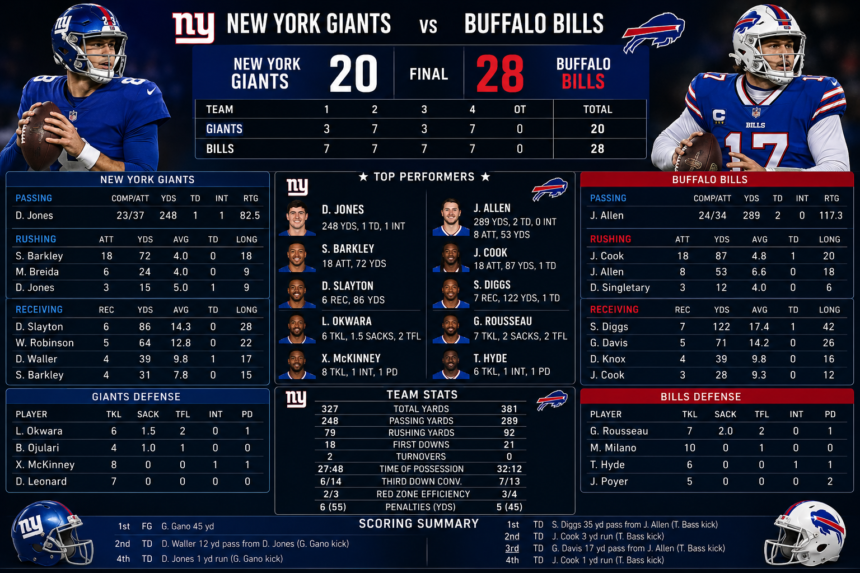
While the final score determines the winner, player statistics reveal how the game truly unfolded. Passing yards, rushing attempts, receiving totals, sacks, interceptions, tackles, and special teams contributions all help explain which players had the greatest impact. This article provides a complete analysis of the New York Giants vs. Buffalo Bills match player stats and highlights the key performers from both teams.
Match Overview
The game featured competitive football from the opening kickoff to the final quarter. Both teams created scoring opportunities through balanced offensive play while their defenses worked to force mistakes and limit big plays.
Momentum shifted several times as each team responded with important drives, defensive stops, and crucial third-down conversions.
Quarterback Performance
Quarterbacks played a major role throughout the matchup.
New York Giants Quarterback
The Giants quarterback demonstrated strong decision-making by completing short and intermediate passes while occasionally stretching the field with deep throws.
Important statistics included:
- Passing yards
- Completion percentage
- Passing touchdowns
- Interceptions
- Quarterback rating
Efficient ball distribution helped sustain several offensive drives.
Buffalo Bills Quarterback
The Bills quarterback showcased excellent mobility and arm strength, creating opportunities both inside and outside the pocket.
Key performance categories included:
- Passing completions
- Total passing yards
- Touchdown passes
- Average yards per attempt
- Total offensive production
The quarterback’s leadership kept the offense moving during crucial moments.
Running Back Statistics
The running game remained an important part of both offensive strategies.
New York Giants
The Giants running backs consistently attacked the defensive front while contributing in the passing game.
Key rushing statistics included:
- Total rushing yards
- Carries
- Average yards per carry
- Longest run
- Rushing touchdowns
Buffalo Bills
Buffalo effectively mixed designed running plays with quarterback rushing opportunities to keep the defense guessing.
Their rushing attack helped control possession and opened passing lanes throughout the game.
Wide Receiver Performance
Wide receivers and tight ends made several important plays.
Giants Receiving Leaders
Top receivers contributed through:
- Total receptions
- Receiving yards
- Long receptions
- Touchdowns
- First-down catches
Reliable hands and precise route running helped extend multiple drives.
Bills Receiving Leaders
Buffalo’s receiving group displayed speed, athleticism, and strong chemistry with the quarterback.
Several key catches came during third-down situations and inside the red zone.
Defensive Highlights
Defense played a significant role in limiting explosive plays.
New York Giants Defense
The Giants defense recorded important contributions in several categories:
- Solo tackles
- Assisted tackles
- Sacks
- Tackles for loss
- Pass breakups
- Forced fumbles
- Interceptions
Their defensive pressure disrupted passing plays throughout the contest.
Buffalo Bills Defense
Buffalo’s defense maintained its aggressive style by consistently pressuring the quarterback and limiting rushing lanes.
Important defensive statistics included:
- Quarterback sacks
- Pressures
- Turnovers forced
- Red-zone stops
- Defensive tackles
Strong defensive execution helped shift momentum during critical possessions.
Special Teams Impact
Special teams often influence close NFL games.
Both teams received valuable contributions from:
- Field goal kickers
- Punters
- Kick return specialists
- Punt return units
Field position played an important role throughout several scoring drives.
Team Statistical Comparison
Important team statistics included:
- Total offensive yards
- Passing yards
- Rushing yards
- First downs
- Third-down conversion percentage
- Time of possession
- Turnovers
- Penalties
- Red-zone efficiency
These numbers provide a complete picture of each team’s overall performance.
Key Turning Points
Several moments changed the course of the game:
- A touchdown drive that shifted momentum.
- A critical fourth-down defensive stop.
- A game-changing interception.
- A long rushing play.
- Successful red-zone execution.
These plays proved decisive in determining the final outcome.
Top Performers
Several players delivered outstanding performances.
New York Giants
- Leading passer
- Leading rusher
- Top receiver
- Defensive standout
Buffalo Bills
- Most productive quarterback
- Leading running back
- Top receiving target
- Defensive leader
These athletes consistently influenced the game on both sides of the football.
Final Thoughts
The New York Giants vs. Buffalo Bills matchup once again delivered exciting NFL action filled with impressive individual performances and strategic football. Player statistics highlight how both offenses moved the ball, how defenses created momentum-changing plays, and which players stepped up during the most important moments.
Whether you follow the NFL for team analysis, fantasy football, or pure entertainment, reviewing detailed player statistics provides valuable insight into how the game unfolded and what both teams can build on in future matchups.