



Introduction
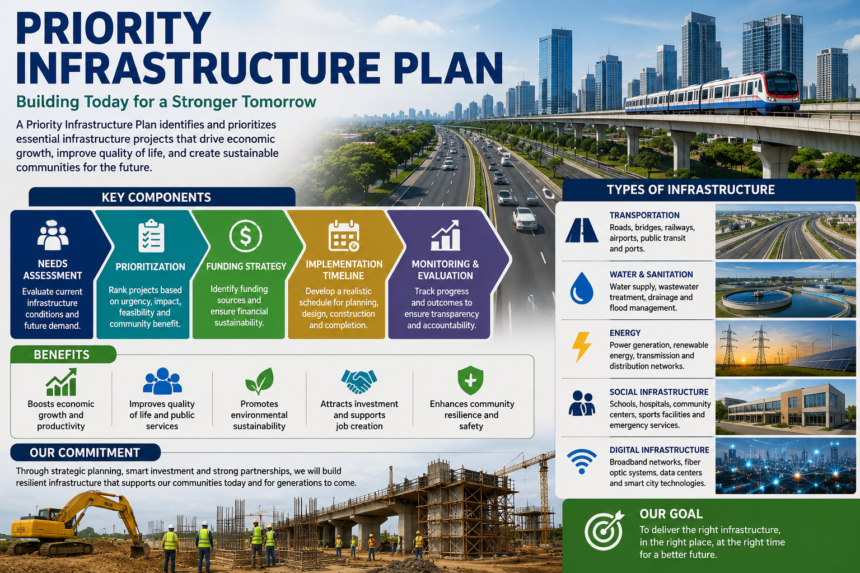
A Priority Infrastructure Plan (PIP) is a strategic document that identifies and schedules the most important infrastructure projects needed to support economic growth, population expansion, and sustainable community development. It helps governments, local authorities, and organizations decide which infrastructure investments should be completed first based on community needs, available funding, and long-term development goals.
Infrastructure is the backbone of every modern society. Roads, bridges, water supply systems, electricity networks, schools, hospitals, public transportation, and digital communication systems all contribute to improving quality of life and supporting economic activity. A well-designed Priority Infrastructure Plan ensures that these essential projects are delivered efficiently and responsibly.
What Is a Priority Infrastructure Plan?
A Priority Infrastructure Plan is a long-term planning framework that outlines future infrastructure requirements and establishes priorities for investment. Instead of building projects randomly, governments use the plan to determine which developments will have the greatest social and economic impact.
The plan often covers a period of 10 to 30 years and is updated regularly to reflect changes in population growth, technology, environmental conditions, and financial resources.
Importance of a Priority Infrastructure Plan
Infrastructure projects require significant investment and careful planning. A Priority Infrastructure Plan helps decision-makers allocate resources wisely while reducing unnecessary spending.
Some key benefits include:
- Supporting sustainable urban and regional development
- Improving public services and transportation
- Encouraging private investment
- Creating employment opportunities
- Enhancing economic productivity
- Protecting environmental resources
- Improving community resilience during emergencies
By identifying priority projects, governments can ensure infrastructure keeps pace with future demand.
Key Components of a Priority Infrastructure Plan
A comprehensive Priority Infrastructure Plan typically includes several essential elements.
Population and Growth Forecasts
Planning begins with estimating future population growth and identifying areas expected to experience increased demand for infrastructure.
Infrastructure Needs Assessment
This section evaluates the current condition of roads, public transport, water systems, energy networks, healthcare facilities, schools, and digital infrastructure.
Priority Project List
Projects are ranked according to urgency, community benefits, economic value, environmental impact, and available funding.
Funding Strategy
The plan identifies potential funding sources, including government budgets, public-private partnerships, development agencies, and private investment.
Implementation Timeline
Each project is assigned a realistic schedule that outlines planning, construction, and completion phases.
Types of Infrastructure Included
A Priority Infrastructure Plan usually covers multiple sectors to support balanced development.
Transportation Infrastructure
Roads, highways, bridges, airports, railways, ports, bicycle lanes, and public transit systems improve mobility and economic connectivity.
Water and Sanitation
Reliable water supply, wastewater treatment, drainage systems, and flood management infrastructure help protect public health and the environment.
Energy Infrastructure
Electricity generation, renewable energy projects, power distribution networks, and energy storage systems ensure reliable access to power.
Social Infrastructure
Schools, hospitals, community centers, sports facilities, libraries, and emergency services improve education, healthcare, and community well-being.
Digital Infrastructure
Broadband internet, fiber-optic networks, mobile communication towers, and smart city technologies support economic growth and digital transformation.
Benefits for Communities
A well-implemented Priority Infrastructure Plan creates lasting benefits for residents and businesses.
Improved transportation reduces travel time and transportation costs. Better healthcare facilities improve public health outcomes. Reliable utilities support businesses and attract new investment. Modern schools strengthen education systems, while digital infrastructure expands access to online services and employment opportunities.
Infrastructure investment also stimulates economic growth by creating jobs during construction and increasing productivity after project completion.
Challenges in Infrastructure Planning
Developing and implementing a Priority Infrastructure Plan can be challenging.
Common obstacles include:
- Limited financial resources
- Rising construction costs
- Environmental regulations
- Land acquisition issues
- Population uncertainty
- Climate change impacts
- Political changes and shifting priorities
Effective planning, transparent governance, and stakeholder collaboration help overcome these challenges.
Future Trends in Infrastructure Planning
Modern infrastructure planning is increasingly focused on sustainability and innovation.
Smart city technologies, renewable energy, electric vehicle charging networks, green buildings, climate-resilient infrastructure, artificial intelligence, and digital monitoring systems are becoming essential parts of future Priority Infrastructure Plans.
Governments are also emphasizing environmentally friendly construction methods and carbon reduction strategies to support long-term sustainability goals.
Conclusion
A Priority Infrastructure Plan is an essential tool for guiding future development and ensuring that critical infrastructure projects are delivered efficiently. By identifying priority investments, allocating resources wisely, and planning for long-term growth, governments can build stronger, more resilient communities.
As populations continue to grow and technology evolves, effective infrastructure planning will remain one of the most important factors in achieving sustainable economic development and improving the quality of life for future generations.