


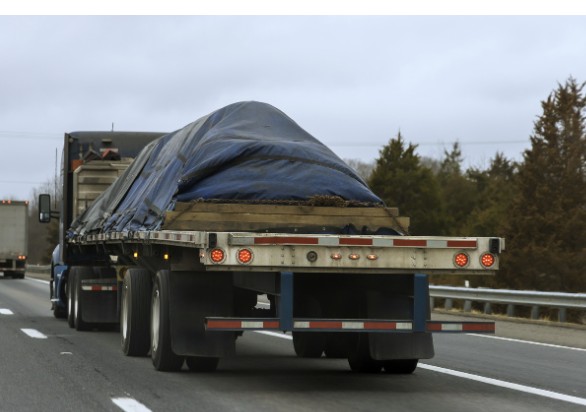
TLDR: Flatbed trailers are required for cargo that is too large, too heavy, or too awkwardly shaped to fit through the rear door of an enclosed trailer. This includes construction equipment, structural steel, lumber, precast concrete, and oversized machinery. If your freight cannot be loaded from the rear, a flatbed is probably what you need.
Flatbed trailers are designed for freight that requires top loading or side loading because its dimensions, weight, or shape make rear-door enclosed trailer loading impossible or impractical. The American Trucking Associations classifies flatbed freight as the second-largest freight category in the U.S. by volume, primarily serving construction, manufacturing, and energy sectors that regularly move oversized or awkwardly shaped loads.
Contractors, manufacturers, and distributors managing freight that does not fit standard enclosed trailers use flatbed trailer rental to access the right equipment for specific loads without maintaining specialized assets that may only be needed periodically.
What Makes a Flatbed Different From Other Trailer Types?
A flatbed trailer has a flat, open deck with no sides, no roof, and no rear door. Cargo is loaded from the top or the sides using a crane, forklift, or other mechanical equipment. The cargo is then secured to the deck using chains, straps, and binders before transit.
The open deck provides loading flexibility that enclosed trailers cannot match. A steel beam that is 40 feet long and 10 feet wide cannot enter a standard 96-inch enclosed trailer door. It can be set on a flatbed deck from above and secured for transit.
The tradeoff is exposure. Flatbed freight is not protected from the weather. Cargo that cannot tolerate rain, UV exposure, or road contamination requires tarping or an enclosed alternative.
How Do You Choose the Right Flatbed Trailer for Your Cargo?
The correct trailer depends on the cargo’s dimensions, weight, loading method, and height requirements.
- Standard Flatbed: Best for lumber, steel, pipe, building materials, and equipment that can be loaded from the side or top and remains within legal height limits.
- Step Deck Trailer: Used when cargo is too tall for a standard flatbed but does not require a lowboy. The lower deck creates additional vertical clearance.
- Lowboy Trailer: Designed for heavy equipment such as bulldozers, excavators, and large machinery that exceed standard height restrictions.
- Removable Gooseneck (RGN): Allows equipment to be driven directly onto the trailer from the front, making it ideal for tracked and wheeled machinery.
- Double Drop Trailer: Used for exceptionally tall freight that requires the lowest possible deck height during transport.
Before selecting a trailer, determine the cargo’s length, width, height, weight, and loading requirements. Matching those specifications to the correct trailer type helps avoid permit issues, loading delays, and transportation restrictions.
What Types of Freight Move on Flatbeds?
Construction Materials and Equipment
Structural steel, precast concrete panels, rebar bundles, lumber packages, and manufactured trusses all move on flatbeds because of their size and loading requirements. Construction equipment, including excavators, bulldozers, skid steers, and cranes, is transported on flatbeds or lowboy trailers, depending on their height and weight.
Manufacturing Freight
Large industrial equipment, turbine components, pressure vessels, and manufacturing machinery regularly exceed enclosed trailer dimensions and require flatbed transport with appropriate securement.
Agricultural Equipment
Tractors, combines, planters, and hay equipment all move on flatbeds during seasonal transport between farms, dealers, and storage facilities.
Pipe and Conduit
Long lengths of steel pipe, conduit, and ductwork are loaded horizontally onto flatbed decks. Their length often exceeds enclosed trailer capacity, and their cylindrical shape makes rear-door loading impractical.
What Are the Standard Flatbed Dimensions?
| Flatbed Type | Length | Deck Width | Max Payload |
| Standard flatbed | 48 or 53 feet | 8.5 feet | 48,000 lbs |
| Stepdecktrailer | 48 or 53 feet | 8.5 feet | 46,000 lbs |
| Lowboy | 24 to 30 feet (well) | 8.5 feet | 40,000 to 80,000 lbs |
| Double drop (RGN) | 48 or 53 feet | 8.5 feet | 40,000 to 60,000 lbs |
Cargo that exceeds 8.5 feet in width requires an oversize permit in all jurisdictions. Height over 13.5 to 14 feet requires a height clearance permit. A weight over 80,000 gross vehicle weight requires an overweight permit.
What Securement Rules Apply to Flatbed Freight?
FMCSA regulations require flatbed cargo to be secured against longitudinal, lateral, and vertical movement. Minimum requirements include:
- One tie-down for cargo under 5 feet in length and under 1,100 pounds
- Two tie-downs for cargo between 5 and 10 feet or over 1,100 pounds
- Additional tie-downs for cargo over 10 feet at a rate of one per 10 feet of additional length
Working load limit on all tie-down equipment must meet or exceed 50 percent of the cargo weight. Chains and binders used for heavy equipment must be Grade 70 or higher.
Improperly secured flatbed freight creates road hazards that are federally regulated and produce significant liability exposure for carriers and shippers.
When Should You Rent a Flatbed Instead of Owning One?
Flatbed trailer ownership makes the most sense for carriers who move flatbed freight daily as their primary business. For everyone else, the episodic nature of oversized load transport makes rental a financially sound alternative.
A construction company that moves equipment between job sites several times per year, a manufacturer that ships large components seasonally, or a steel fabricator with periodic oversized delivery requirements all benefit from rental access without the ownership carrying costs.
Monthly flatbed rental rates average $600 to $1,200 for a standard 48 or 53-foot unit. Against an ownership cost of $15,000 to $30,000 per year, including depreciation, maintenance, and insurance, rental is the financial choice for any business using the equipment fewer than 25 weeks per year.
Key Takeaways
- Flatbeds are required for cargo that is too large, too heavy, or too irregularly shaped for rear-door enclosed trailer loading
- Standard 53-foot flatbeds carry up to 48,000 pounds of payload within 80,000 pounds gross vehicle weight
- Cargo over 8.5 feet wide requires an oversize permit; cargo over 80,000 GVW requires an overweight permit
- FMCSA securement regulations require specific tie-down quantities and working load limits based on cargo weight and dimensions
- Monthly flatbed rental averages $600 to $1,200 versus $15,000 to $30,000 annual ownership carrying costs
- Rental is financially sound for any business using flatbed capacity fewer than 25 weeks per year
If your freight does not fit through a door or off a dock plate, a flatbed is likely the answer. Understanding which trailer configuration matches your cargo dimensions is the first step to getting it there on time and in compliance.