



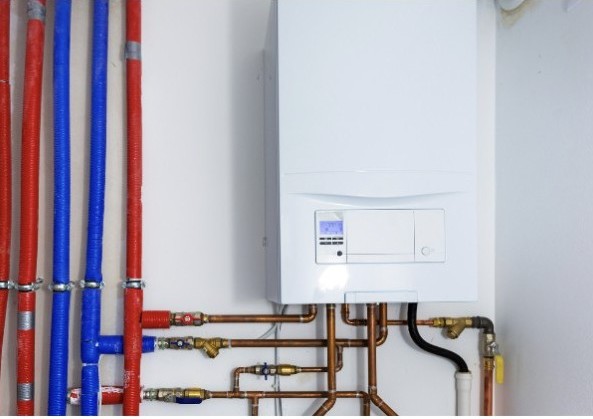
TLDR: Most residential boilers last 15 to 30 years with regular maintenance. The replacement decision depends on age, repair cost relative to replacement value, and current efficiency compared to what modern units deliver. A boiler over 20 years old that needs a repair exceeding $1,000 is almost always a replacement candidate.
A well-maintained boiler lasts between 15 and 30 years. That wide range reflects real variation in maintenance quality, water chemistry, and operating conditions. A boiler serviced annually by a qualified technician at the lower end of that range may reach 25 to 30 years. One that has never been serviced may fail at 12 to 15.
The question of when to replace comes down to three variables: how old the unit is, what the repair costs are, and how much you are spending to operate it inefficiently.
Homeowners in Boulder whose boiler is showing signs of age or has required recent service can get an honest assessment from Best boiler repair boulder co technicians who evaluate whether a repair investment makes financial sense or whether the money is better applied toward replacement.
What Is the Average Lifespan of a Residential Boiler?
The average lifespan depends on boiler type:
| Boiler Type | Average Lifespan |
| Cast iron boiler | 25 to 50 years |
| Steel boiler | 15 to 25 years |
| Copper heat exchanger | 10 to 20 years |
| High-efficiency condensing | 15 to 20 years |
Cast iron boilers are the most durable residential heating equipment available. Many cast-iron boilers from the 1970s and 1980s are still operating in their original condition. Their longevity comes from the material’s resistance to corrosion and the simplicity of their construction.
Condensing boilers achieve efficiency ratings of 90 to 98 percent AFUE but contain more sensitive components than cast iron units and have a shorter service life despite superior efficiency.
What Are the Signs a Boiler Is Nearing the End of Its Life?
Increased Fuel Consumption
A boiler that uses more fuel to deliver the same amount of heat has declining efficiency. Sediment in the heat exchanger, scaling on heat transfer surfaces, and worn combustion components all reduce efficiency over time.
The U.S. Department of Energy estimates that an inefficient heating system can increase fuel costs by 10 to 30 percent compared to a properly tuned unit. If your heating bills have risen without a corresponding change in usage, the boiler’s efficiency is the first variable to investigate.
Frequent Repairs
A boiler that has required service two or more times in the same heating season is showing component fatigue. Individual component failures in an aging boiler are rarely isolated. When one component fails, adjacent components are often under similar stress.
The 50 percent rule applies: when a single repair costs more than 50 percent of the replacement cost of the unit, replacement delivers better long-term financial value.
Visible Corrosion or Rust
Surface rust on cast iron sections or steel components indicates moisture contact that should not be occurring. Visible corrosion is often a sign of a water chemistry issue, a leak at a connection, or condensation patterns that indicate operational problems.
Internal corrosion that is not visible from the exterior can cause sudden heat exchanger failures. A technician who pressure-tests the system can identify internal degradation before it causes a failure.
Uneven Heat Distribution
Zones that used to heat consistently but now struggle to reach temperature indicate either a circulation problem, a zone valve failure, or insufficient boiler output. On an older unit, insufficient output often means heat exchanger fouling that reduces heat transfer.
How Do You Calculate Whether to Repair or Replace?
The 50 Percent Rule: If the repair cost exceeds 50 percent of the new unit’s installed cost, replace.
The Age-Cost Formula (5,000 Rule): Multiply the unit’s age by the repair cost. If the result exceeds 5,000, replacement is generally preferred.
Example: A 18-year-old boiler needs a $400 repair. 18 × $400 = $7,200. The formula suggests replacement.
The Efficiency Calculation: A boiler running at 70 percent AFUE replaced by one running at 95 percent AFUE saves 25 percent of the fuel cost annually. On a $1,500 annual heating bill, that is $375 per year. A $6,000 replacement pays back in 16 years through fuel savings alone, not counting avoided repair costs.
What Does a New High-Efficiency Boiler Cost?
| Boiler Type | Installed Cost Range |
| Standard efficiency (80% AFUE) | $3,000 to $5,000 |
| High efficiency (90%+ AFUE) | $5,000 to $9,000 |
| Condensing combi-boiler | $4,000 to $8,000 |
Federal tax credits under the Inflation Reduction Act provide up to $600 for qualifying high-efficiency boiler replacements. Many utility companies offer additional rebates for meeting minimum efficiency thresholds.
What Annual Maintenance Does a Boiler Need to Reach Its Full Lifespan?
Annual professional service should include:
- Combustion analysis to verify that the fuel-to-air ratio produces complete combustion
- Heat exchanger inspection for cracks, scaling, and corrosion
- Flue inspection for obstructions, corrosion, and proper draft
- Safety control testing, including pressure relief valve, low water cutoff, and thermostat calibration
- System pressure check to confirm the expansion tank is functioning correctly
- Pump and circulator inspection for bearing noise and seal condition
A boiler that receives this service annually is far more likely to reach the upper end of its expected lifespan. One that receives no service reaches the lower end and fails unpredictably.
Key Takeaways
- Cast iron boilers last 25 to 50 years; high-efficiency condensing units last 15 to 20 years with proper maintenance
- The 50 percent rule and the 5,000 formula (age × repair cost) provide a quick financial comparison of repair vs. replacement
- A boiler upgrade from 70 percent to 95 percent AFUE reduces annual fuel consumption by 25 percent, producing a measurable payback
- Federal tax credits provide up to $600 toward qualifying high-efficiency boiler replacement costs
- Annual professional service that includes combustion analysis, heat exchanger inspection, and safety control testing is the single most important factor in boiler longevity
- Two or more repairs in a single heating season on a unit over 15 years old is the clearest signal that replacement has become the better financial decision
Your boiler is the heart of your home’s heating system, and like most things worth keeping, it rewards attention and punishes neglect. Whether you are troubleshooting an issue or planning for the future, knowing where your boiler stands in its lifecycle helps you make the call with confidence rather than under pressure.